
Solar Installation for Hospitals
Hospitals need reliable electricity around the clock, from patient care and medical equipment to air conditioning and lighting. With such high energy demands, electricity bills can quickly become a major operating expense.
Solar installation for hospitals helps reduce grid electricity consumption and manage long-term energy costs. Solar Oorja provides customised solar solutions for hospitals, clinics and diagnostic centres in Noida, Greater Noida and Ghaziabad, designed around your facility’s energy needs and available rooftop space.
Why Hospitals Are Switching to Solar Energy
Hospitals operate differently from ordinary commercial buildings. Their electricity demand can remain high even during nights, weekends and holidays. A well-planned solar installation can help healthcare facilities manage some of these recurring expenses.
Reduce Monthly Electricity Bills
Solar panels generate electricity during daylight hours, helping hospitals meet part of their daytime demand. The amount saved depends on system capacity, solar generation, electricity tariffs and how much power the hospital consumes while the system is producing electricity.
Support Continuous Hospital Operations
A solar installation can supply power to suitable electrical loads during normal operation. When combined with an appropriately designed battery backup system, it can also support selected essential loads during grid outages.
However, rooftop solar alone does not guarantee uninterrupted electricity. Critical medical equipment and emergency circuits require dedicated backup arrangements and professional electrical planning.
Make Better Use of Available Rooftop Space
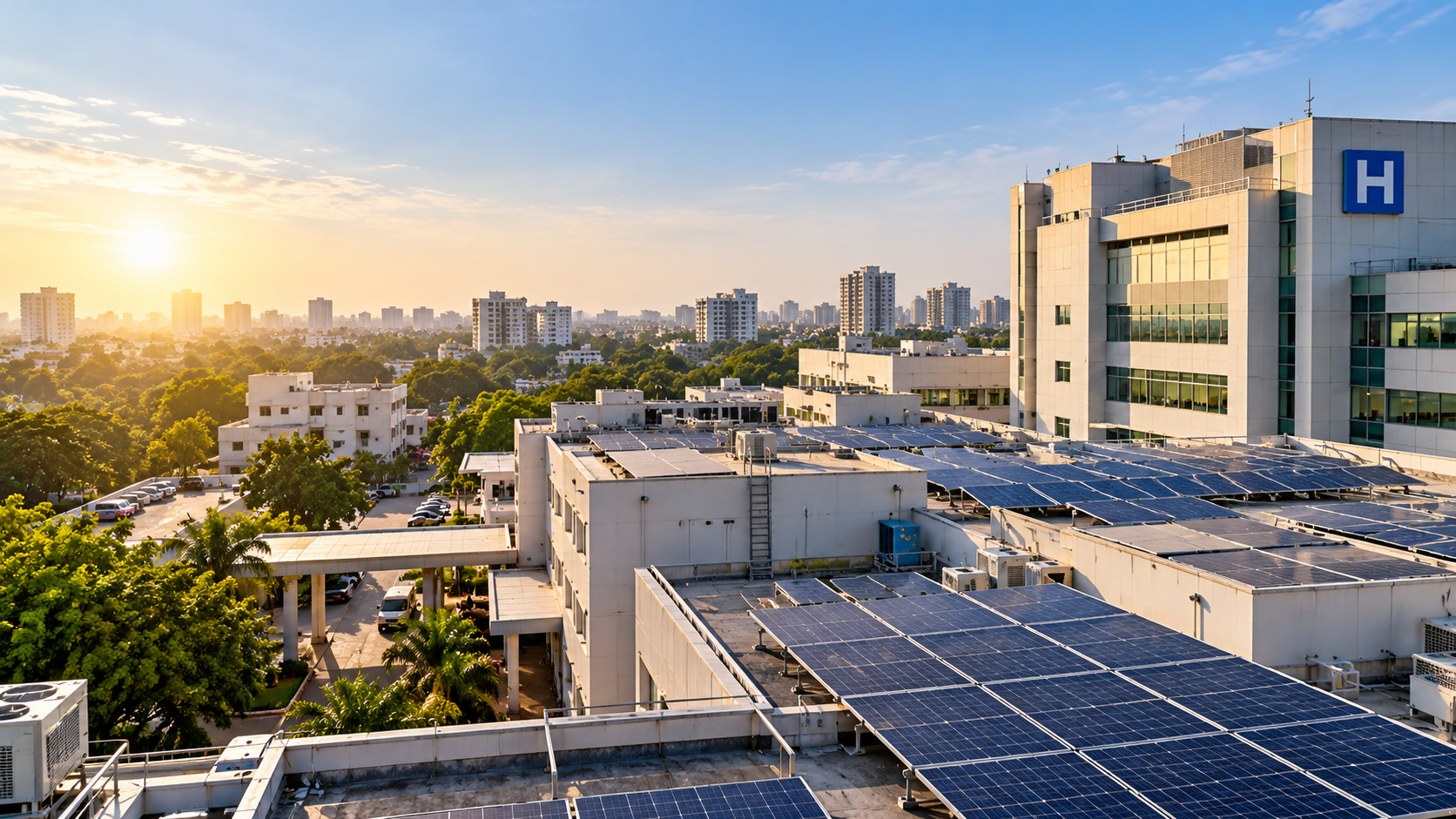
Hospitals often have large rooftops, service buildings and other areas that may be suitable for solar panels. A site survey helps identify usable space while accounting for water tanks, HVAC equipment, ventilation systems, shading, maintenance access and structural limitations.
Improve Long-Term Energy Cost Planning
Electricity is a recurring operating expense for healthcare facilities. Generating a portion of their own electricity can help hospitals reduce exposure to grid electricity costs over the life of the system.
Actual financial returns depend on installation cost, energy generation, tariffs, maintenance and the hospital’s consumption pattern.
Support Sustainability Goals
Solar power can help hospitals reduce the amount of electricity they draw from conventional grid sources. It can also support environmental initiatives, energy-efficiency programmes and sustainability reporting.
Which Areas of a Hospital Can Benefit from Solar Power?
Solar systems should be designed around the hospital’s electrical layout and operational priorities rather than treating every circuit as an identical load.
| Hospital Area | Potential Solar Application |
|---|---|
| General wards and patient rooms | Offset electricity used for lighting, fans and suitable equipment |
| Administrative offices | Support computers, lighting and other daytime electrical loads |
| Laboratories and diagnostic centres | Offset suitable equipment and facility electricity consumption |
| OPD and consultation areas | Support daytime lighting, air conditioning and office loads |
| Corridors and common areas | Reduce grid electricity used for lighting |
| Laundry and utility sections | Offset suitable daytime operational loads |
| Water pumping systems | Support compatible pumps during solar generation hours |
| HVAC systems | Offset part of the electricity used for cooling and ventilation |
The actual loads supplied by solar depend on the system design and the hospital’s electrical distribution arrangement. Essential life-support equipment, operating theatres and other critical circuits must receive particular attention during backup and electrical safety planning.
Solar Installation for Hospitals: Which System Is Right for You?
Hospitals have different electricity requirements depending on their size, operating hours, equipment and existing backup infrastructure. Solar Oorja can help evaluate the following system configurations.
On-Grid Solar System for Hospitals
An on-grid solar system connects to the electricity grid and supplies solar-generated power to the facility through suitable electrical infrastructure.
During sunny hours, the hospital uses the generated electricity to offset its demand. Depending on applicable regulations and the approved metering arrangement, surplus electricity may be exported to the grid.
Best suited for: Hospitals with a reliable grid connection and substantial daytime electricity consumption.
Key benefits:
- Helps reduce grid electricity consumption.
- Generally avoids the additional battery cost of a battery-based system.
- Can make productive use of suitable rooftop space.
- May allow eligible surplus electricity to be accounted for under applicable metering rules.
Hybrid Solar System for Hospitals
A hybrid solar system combines solar generation with battery storage and grid connectivity, where supported by the selected equipment and electrical design.
The battery can supply designated loads when grid power is unavailable, subject to its capacity, inverter rating, load requirements and available stored energy.
Best suited for: Hospitals that want to combine solar savings with backup for selected electrical loads.
Key benefits:
- Supports selected circuits during power interruptions.
- Can reduce grid electricity consumption when solar generation is available.
- Offers flexibility in managing stored solar energy.
- Can complement existing backup infrastructure when properly integrated.
Off-Grid Solar System for Hospitals
An off-grid solar system operates independently of the utility grid and normally requires suitable battery storage and backup generation for periods of low solar production.
Best suited for: Healthcare facilities in locations where grid access is unavailable or particularly unreliable.
Key considerations:
- Battery capacity must match the expected energy demand.
- Solar generation varies with weather and season.
- Backup generation may be required for extended periods of low sunlight.
- Critical healthcare loads require careful redundancy and reliability planning.
Cost of Solar Installation for Hospitals
The cost of hospital solar installation depends on the required capacity, usable rooftop area, mounting structure, electrical infrastructure, equipment selection and whether battery storage is included.
A smaller clinic may need a relatively modest system, while a multi-storey hospital with significant cooling and diagnostic loads may require a much larger installation.
The following table provides an illustrative planning guide, not a confirmed quotation.
| Solar Capacity | Potential Application | What Affects the Cost |
|---|---|---|
| 10 kW | Small clinics and healthcare offices | Roof space, electrical connection and equipment |
| 25 kW | Clinics and smaller healthcare facilities | Load profile and mounting requirements |
| 50 kW | Medium-sized hospitals | Roof structure, electrical integration and system design |
| 100 kW | Larger hospitals and multi-department facilities | Available roof area, connection capacity and installation complexity |
| 200 kW and above | Large hospitals and hospital campuses | Structural assessment, electrical infrastructure, approvals and project scope |
These capacities are starting points for discussion, not recommendations for a particular hospital. The appropriate size must be calculated from electricity bills, interval consumption data where available, sanctioned load, daytime demand and site feasibility.
What Determines the Final Installation Cost?
Solar panel capacity
Larger installations require more panels, mounting structures, inverters and electrical components.
Roof condition and structure
The roof must be assessed for load-bearing capacity, waterproofing, access and safe mounting.
Electrical integration
Switchgear, cabling, protection devices, metering and interconnection requirements affect the project cost.
Battery backup
Hybrid installations with batteries generally cost more than comparable on-grid systems. Battery size and backup duration influence the additional investment.
Approvals and metering
Applicable DISCOM requirements, connection category and export arrangements must be considered during planning.
How Much Can a Hospital Save With Solar?
Savings depend on how much of the generated electricity the hospital can use, its electricity tariff, system performance and any applicable export compensation.
A useful estimate should include:
- Current electricity consumption and tariff.
- Expected monthly and annual solar generation.
- Daytime self-consumption.
- Applicable charges and export-credit rules.
- Annual maintenance and equipment replacement assumptions.
- Total project cost and estimated payback period.
Solar Oorja can assess these factors before recommending a system size. We avoid treating a fixed savings percentage or payback period as universal because hospitals have different operating conditions.
Is Government Subsidy Available for Hospital Solar Installation?
Hospitals should not assume that they qualify for the residential rooftop solar subsidy simply because they are installing panels on a rooftop.
The central assistance under PM Surya Ghar is primarily intended for eligible residential consumers. Commercial and institutional consumers, including many privately operated hospitals, should verify the eligibility of their specific connection and project before including any subsidy in their financial calculations.
Government-owned healthcare buildings may have separate programmes or procurement arrangements depending on the applicable scheme and its current guidelines.
Before proceeding, confirm:
- The hospital’s ownership and electricity consumer category.
- The applicable state policy and DISCOM requirements.
- Whether any relevant institutional or government-building scheme applies.
- The required technical specifications and approvals.
For general information, refer to the Ministry of New and Renewable Energy’s rooftop solar programme.
How Solar Oorja Plans Hospital Solar Installation
A hospital solar project requires coordination between the installation team, facility management and electrical personnel. Our process is designed to understand the site before recommending equipment or capacity.
Site Survey and Roof Assessment
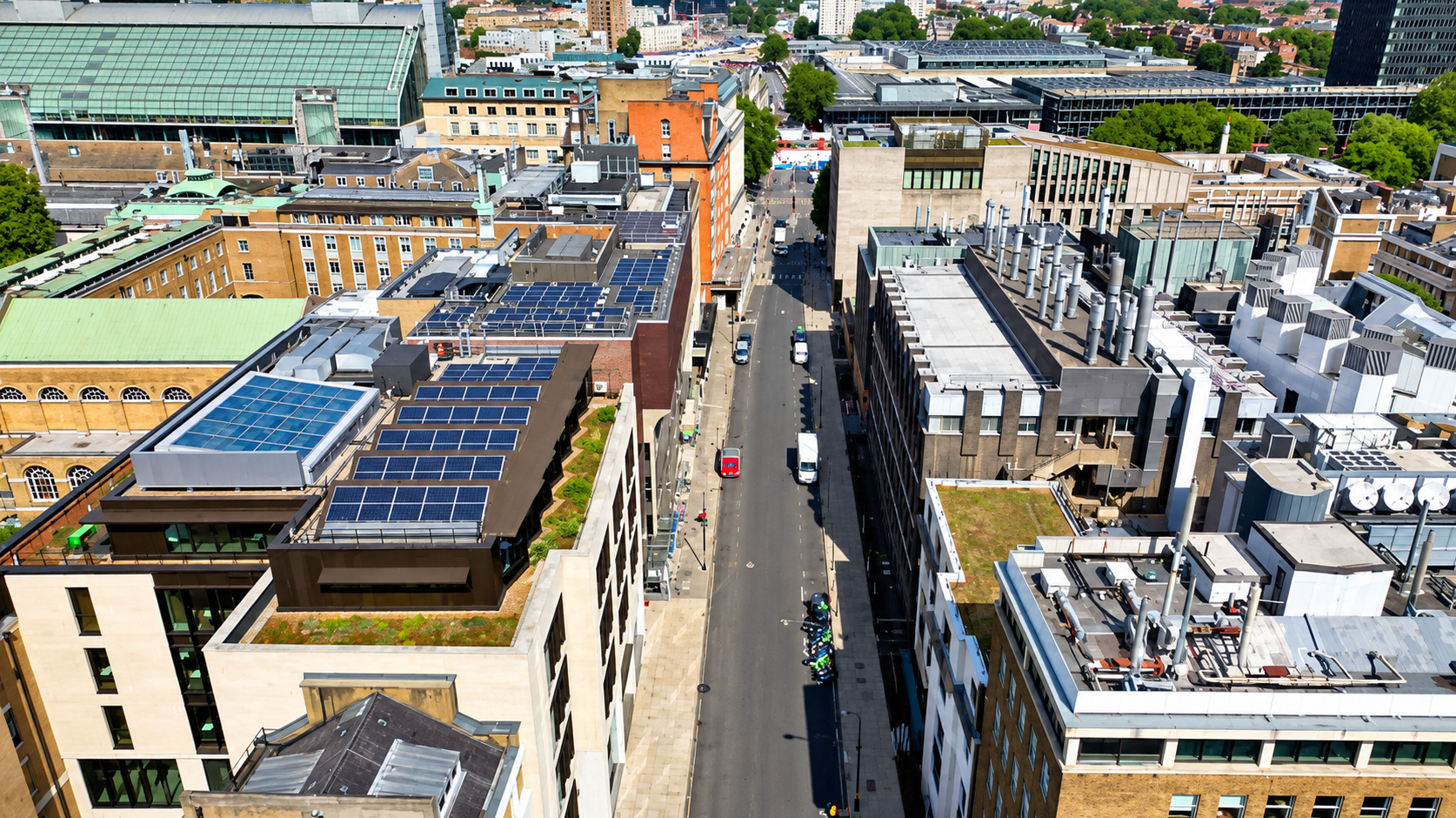
We inspect the available rooftop area, shading, access routes, existing equipment and mounting possibilities. Structural suitability and waterproofing considerations are reviewed as part of project planning.
Electricity Consumption Analysis
We review electricity bills, sanctioned load and available consumption data to understand the hospital’s demand. This helps establish a realistic system size and expected solar utilisation.
Custom System Design
Based on the assessment, we prepare a proposal covering recommended capacity, equipment, expected generation, estimated savings and project cost. Battery backup requirements are evaluated separately when needed.
Electrical Planning and Approvals
The project is planned around the existing electrical distribution system, protection requirements and applicable DISCOM procedures. Any proposed integration with backup generators, UPS systems or essential circuits requires suitable technical review.
Professional Installation
Installation is scheduled in coordination with the hospital’s facility team to minimise disruption. Safe work zones, rooftop access, electrical isolation and protection of ongoing hospital operations are considered.
Testing, Commissioning and Handover
The completed installation is tested before commissioning. The handover can include system documentation, monitoring guidance, maintenance recommendations and applicable warranty information.
Solar Installation for Hospitals in Noida, Greater Noida and Ghaziabad
Solar Oorja provides commercial solar installation services for eligible healthcare facilities across Noida, Greater Noida and Ghaziabad.
Hospital Solar Installation in Noida
Hospitals, multispeciality facilities, clinics and diagnostic centres in Noida can explore rooftop solar to offset electricity used for cooling, lighting, administration and other suitable loads. We assess roof availability, consumption patterns and the applicable DISCOM process before recommending a system.
Hospital Solar Installation in Greater Noida
Healthcare facilities in Greater Noida can evaluate solar installations based on available rooftop space, daytime electricity requirements and future expansion plans. System sizing should account for existing equipment as well as any planned additions to the facility.
Hospital Solar Installation in Ghaziabad
Hospitals and diagnostic facilities in Ghaziabad can consider commercial rooftop solar to manage recurring electricity expenses. We evaluate site conditions, electrical infrastructure and applicable PVVNL procedures where relevant to the connection.
Why Choose Solar Oorja for Hospital Solar Installation?
- Site-specific system design: Recommendations based on the hospital’s electricity use and rooftop conditions.
- Commercial solar expertise: Solutions planned for businesses and institutional facilities.
- End-to-end project coordination: Support with site assessment, system design, installation and applicable approvals.
- Appropriate system selection: Evaluation of on-grid, hybrid and off-grid configurations.
- Transparent cost estimates: Clear project pricing and estimated generation and savings based on available data.
- Local service coverage: Support for suitable projects in Noida, Greater Noida and Ghaziabad.
Our focus is on recommending a practical solar installation that fits the facility rather than proposing the same system size for every hospital.

Get a Solar Assessment for Your Hospital
Planning solar for a hospital starts with understanding its electricity consumption, available rooftop area and operational requirements.
Share your recent electricity bills, facility location and approximate rooftop area with Solar Oorja. Our team can assess the site and help you understand the suitable solar capacity, estimated installation cost, expected generation and potential savings.
Request a Hospital Solar Installation Estimate Today.

Frequently Asked Question
Can solar panels be installed on hospital rooftops?
Yes. Hospitals can install rooftop solar if the roof is structurally suitable and the project meets applicable electrical, safety, metering and DISCOM requirements. The design must also maintain safe access to rooftop equipment and essential building services.
How much does hospital solar installation cost?
The cost depends on system capacity, equipment, roof conditions, electrical integration and battery requirements. A site survey and review of electricity bills are needed to prepare a reliable quotation.
Can solar power run hospital equipment during a power cut?
A standard on-grid solar system normally shuts down when the grid fails. To supply selected equipment during an outage, the hospital needs a suitably engineered backup arrangement, such as a compatible hybrid inverter and battery system or an appropriately designed alternative backup supply.
Critical equipment must not rely on an unverified solar backup arrangement.
Which solar system is best for a hospital?
An on-grid system may suit a hospital focused on reducing electricity bills. A hybrid system may be appropriate when backup for selected loads is also required. An off-grid system may suit facilities without a dependable grid connection. The choice depends on the site assessment and operational requirements.
How much rooftop space does a hospital need for solar panels?
The space requirement depends on the proposed capacity, panel dimensions, mounting arrangement, shading, roof obstacles and required maintenance clearances. An engineer should assess the usable area before finalising the design.
Can a hospital receive a government subsidy for solar installation?
Eligibility depends on the applicable scheme, ownership and electricity consumer category. Many commercial and privately operated hospital connections do not qualify for the residential assistance under PM Surya Ghar. Eligibility should be confirmed before estimating project costs.
Will solar panels reduce a hospital's diesel generator usage?
Solar can reduce grid electricity consumption during sunny hours. Whether it reduces generator runtime depends on the system configuration, load management, outage patterns and backup integration. A conventional on-grid system does not independently provide power during a grid outage.
How long does hospital solar installation take?
The timeline depends on project capacity, roof conditions, equipment availability, approvals and electrical integration. Larger hospital installations may require additional engineering and coordination. The schedule should be confirmed after the site assessment.
Does Solar Oorja provide hospital solar installation in Noida and Ghaziabad?
Solar Oorja serves suitable commercial solar projects in Noida, Greater Noida and Ghaziabad. Contact the team to arrange a site assessment and discuss your hospital’s requirements.