
Commercial Solar Installation for Factories
Factories consume large amounts of electricity to run machinery, production lines, lighting and other essential operations. Commercial solar installation for factories can help businesses reduce electricity costs, manage rising energy expenses and improve energy efficiency. By installing solar panels on suitable factory rooftops or available land, manufacturers can generate their own electricity, reduce dependence on grid power and support long-term sustainability goals.
Solar Installation for Factories: Why It Makes Business Sense
Factories generally have two characteristics that make rooftop solar worth evaluating: high electricity consumption and substantial rooftop space.
Manufacturing operations also commonly consume electricity during daylight hours, when a rooftop solar system is generating power. This can allow a significant portion of the generated electricity to be consumed directly at the factory rather than relying entirely on grid power.
A well-designed industrial solar system can help a factory:
- Reduce electricity purchase from the grid
- Lower long-term operating expenses
- Make productive use of unused rooftop space
- Generate electricity closer to the point of consumption
- Improve energy-cost planning
- Support corporate sustainability targets
- Reduce dependence on conventional power sources
Actual savings depend on the factory’s load profile, electricity tariff, solar capacity, roof area, shading, operating hours and applicable regulations.
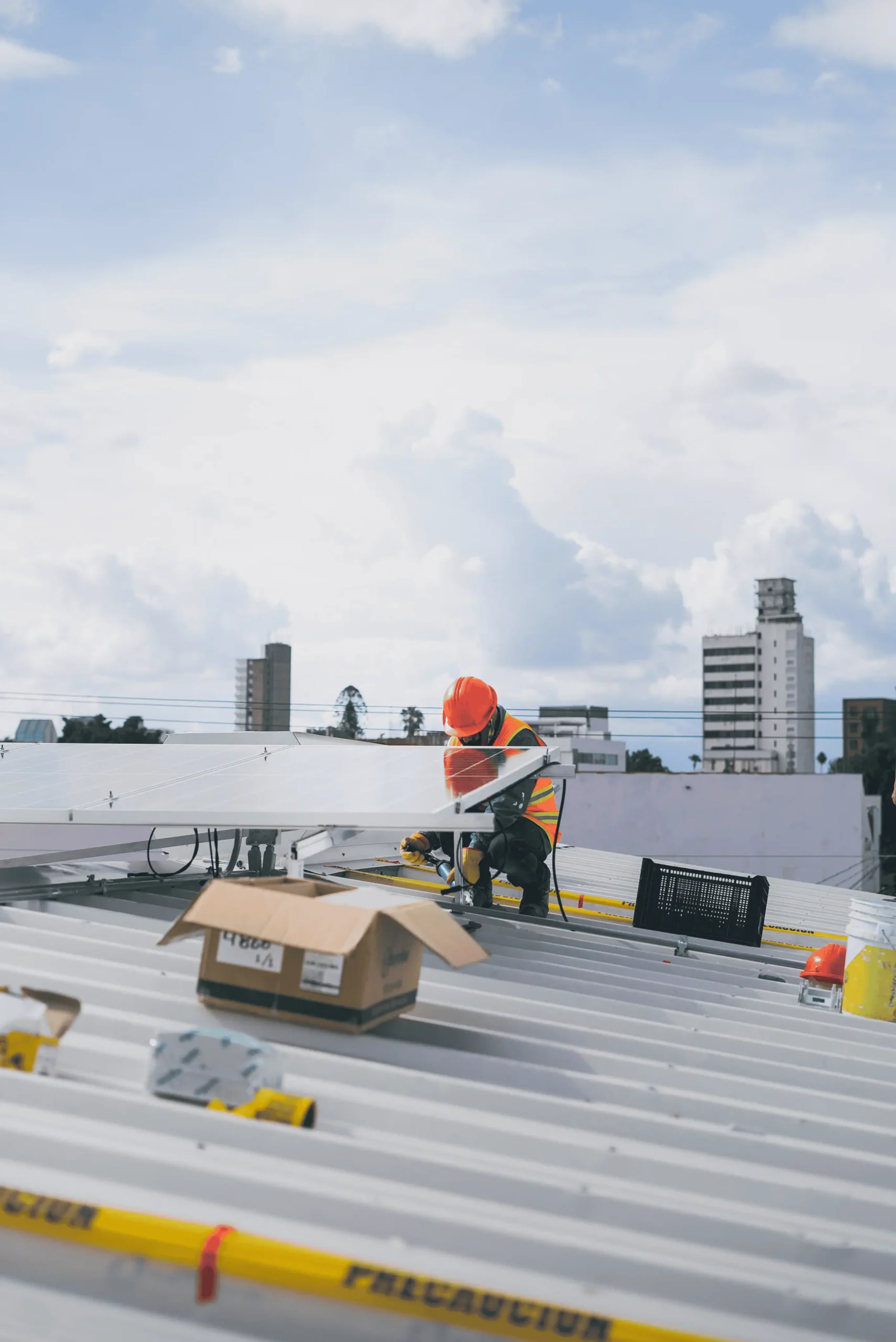
Industrial Solar Panel Installation Based on Your Factory's Load
There is no universal solar system size for every manufacturing unit. A pharmaceutical plant, packaging unit, textile factory, engineering unit and food-processing facility can have completely different electricity requirements.
Before designing the system, we evaluate factors such as:
- Electricity bills and consumption history
- Connected and sanctioned load
- Daytime and shift-wise consumption
- Factory operating hours
- Available rooftop area
- Roof type and structural condition
- Shadow and sunlight availability
- Existing electrical infrastructure
- Transformer and HT/LT configuration
- Applicable DISCOM requirements
- Expected solar generation
This information helps determine how much solar capacity your factory can practically use.
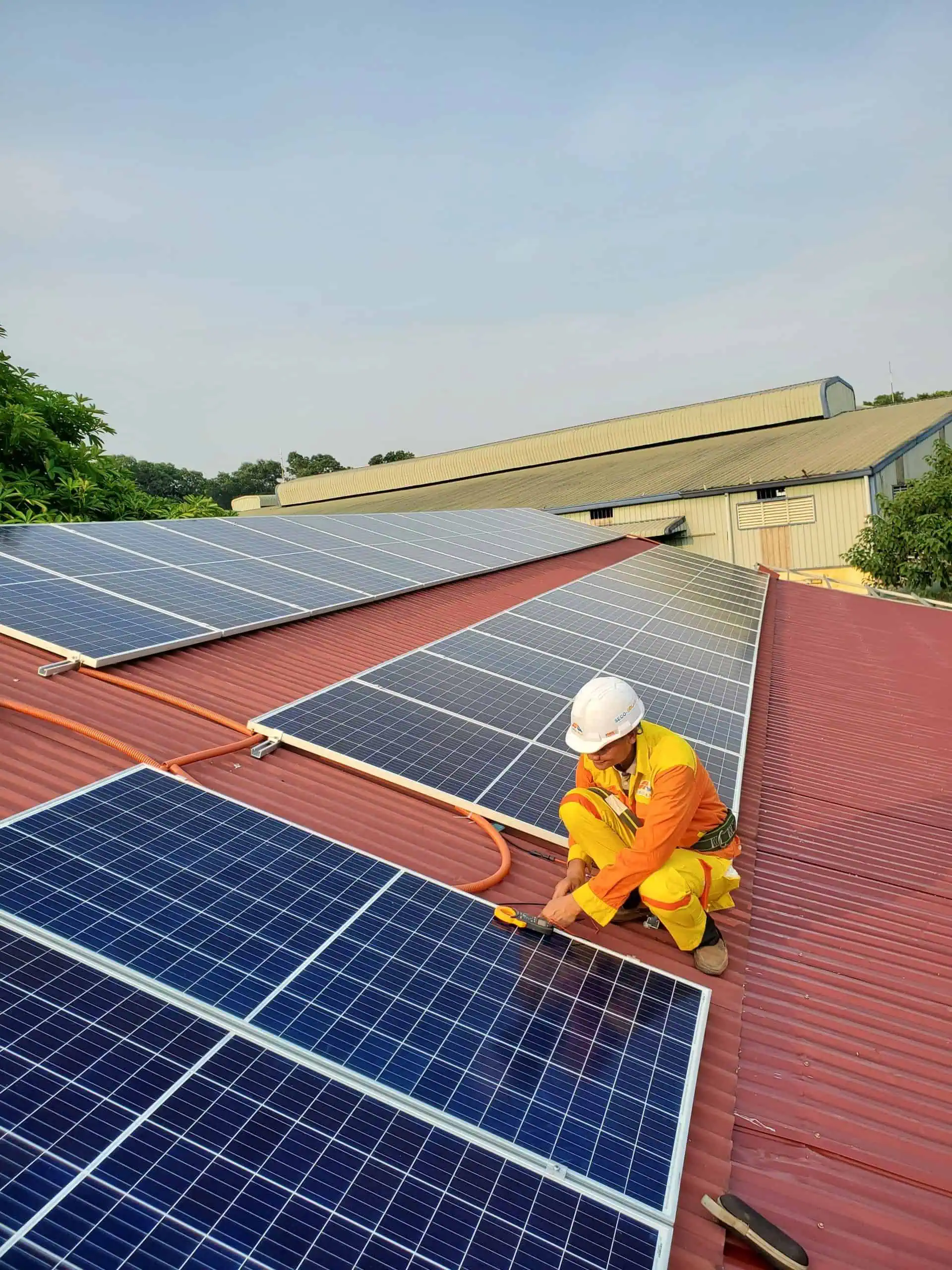
Factory Rooftop Solar Installation
Many industrial buildings have large rooftop areas that remain unused.
Depending on the roof structure, these areas can potentially be used for solar panels without requiring additional land.
A factory rooftop solar installation can be planned for:
- Manufacturing plants
- Engineering units
- Automobile component factories
- Packaging units
- Food-processing facilities
- Pharmaceutical manufacturing units
- Textile and garment factories
- Warehouses with manufacturing operations
- Plastic and chemical industries
- Industrial workshops
- Other suitable industrial facilities
The rooftop is first assessed for structural suitability, usable area, shading and installation access before the final design is prepared.
Solar Installation for Factories in Noida
Noida has a significant mix of manufacturing units, industrial facilities, warehouses and commercial properties.
For factories in Noida, solar system design should take into account the facility’s electricity consumption, operating schedule, rooftop availability and existing electrical connection.
Solar Oorja can assist with:
- Factory rooftop assessment
- Industrial solar system design
- Solar panel installation
- Electrical integration
- Commercial EPC execution
- Net metering support where applicable
- Testing and commissioning
- Solar system monitoring
- Operation and maintenance
If your factory is located in an industrial sector of Noida, a site-specific feasibility assessment can provide a much clearer picture than using a generic solar cost estimate.
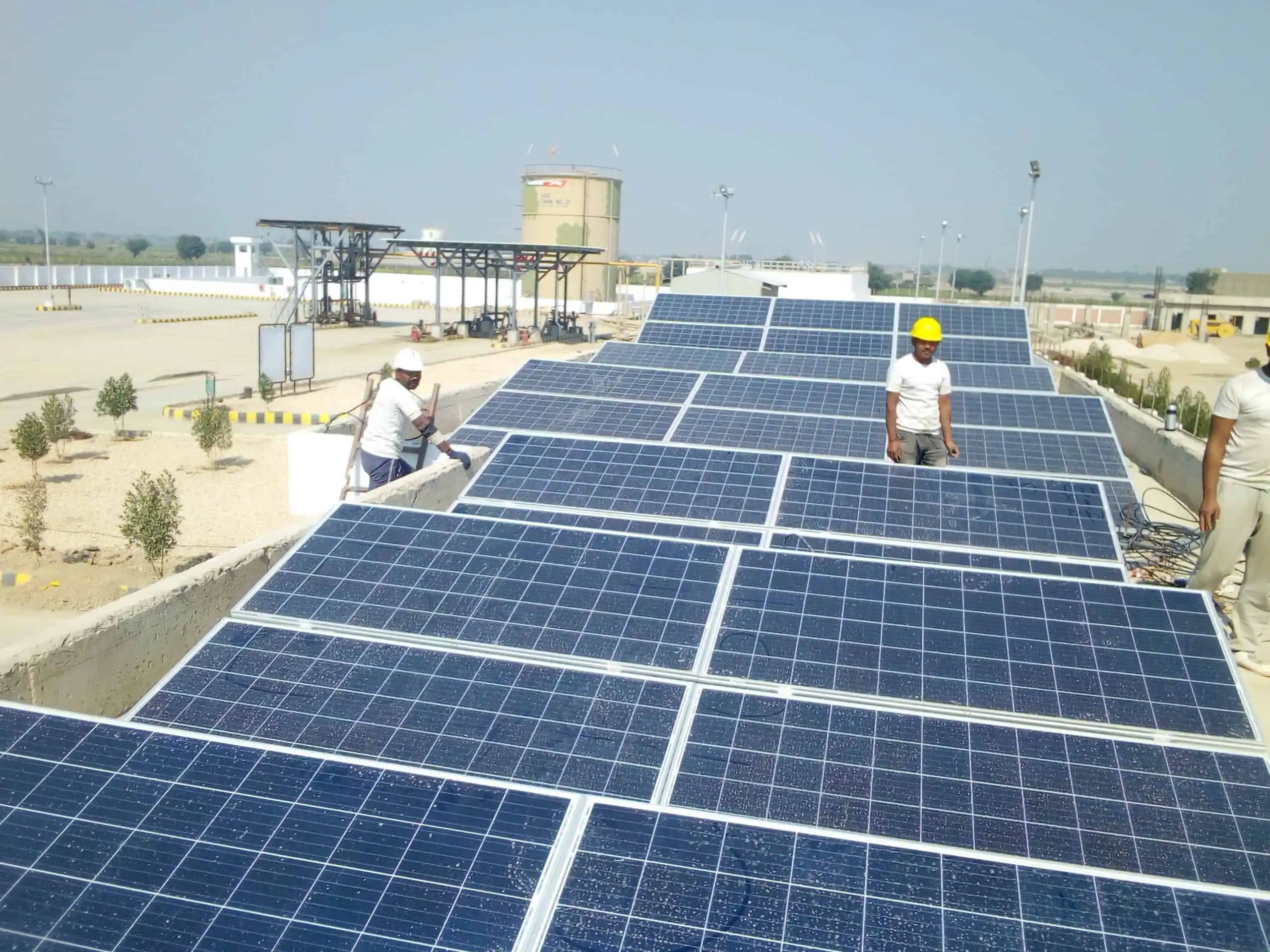
Industrial Solar Installation in Greater Noida
Greater Noida has extensive industrial and manufacturing areas where factories can have large rooftops and substantial electricity requirements. For these facilities, an industrial solar project can be designed around actual production loads instead of simply filling the available roof with panels.
The assessment can help determine:
Factory electricity demand → usable rooftop → recommended capacity → expected generation → estimated savings → project economics
This is particularly important for larger manufacturing units where even small differences in system sizing can significantly affect project economics. Solar Oorja can provide commercial solar solutions for factories across Greater Noida, including industrial areas and manufacturing clusters.

Solar Panels for Factories in Ghaziabad
Factories across Ghaziabad can also evaluate rooftop solar as part of their energy-cost strategy. Industrial properties in areas such as Sahibabad and other manufacturing belts may have substantial electricity consumption and rooftop areas suitable for solar, although each property needs to be assessed individually.
For a factory in Ghaziabad, the project evaluation can include:
- Electricity consumption analysis
- Rooftop feasibility
- Structural assessment
- Solar capacity calculation
- Electrical system evaluation
- Generation estimate
- Project costing
- Grid connection requirements
- Installation planning
This allows the factory management team to evaluate the project based on its own numbers rather than generic industry estimates.
How Much Solar Does a Factory Need?
The answer depends on the factory’s electricity consumption and the amount of solar generation that can be effectively utilised.
For example, two factories with the same roof size may require different solar capacities because their electricity consumption, working shifts and electrical connections can be different.
The system design can consider:
Daytime Consumption
How much electricity does the factory use while the solar plant is generating?
Rooftop Availability
How much shadow-free and structurally suitable area is available?
Operating Schedule
Does the factory operate one shift, two shifts, three shifts or continuously?
Electrical Load
What are the connected and sanctioned loads?
Grid Connection
What type of electrical connection and applicable DISCOM requirements need to be considered?
Future Expansion
Is the factory planning to add machinery, production lines or additional electrical load?
Considering these factors helps avoid both over-sizing and under-sizing the solar plant.
On-Grid Solar for Manufacturing Units
Factories with an existing grid connection can evaluate an on-grid solar system that works alongside their existing electricity supply. During solar generation hours, electricity produced by the system can be used by the factory’s operating loads.
Depending on the applicable regulations and approved connection arrangement, excess generation may be exported to the grid through the relevant net-metering or billing mechanism. The actual arrangement depends on the factory’s connection, sanctioned load, DISCOM, system capacity and prevailing regulations. For this reason, solar feasibility should include both technical and regulatory evaluation rather than focusing only on panel capacity.
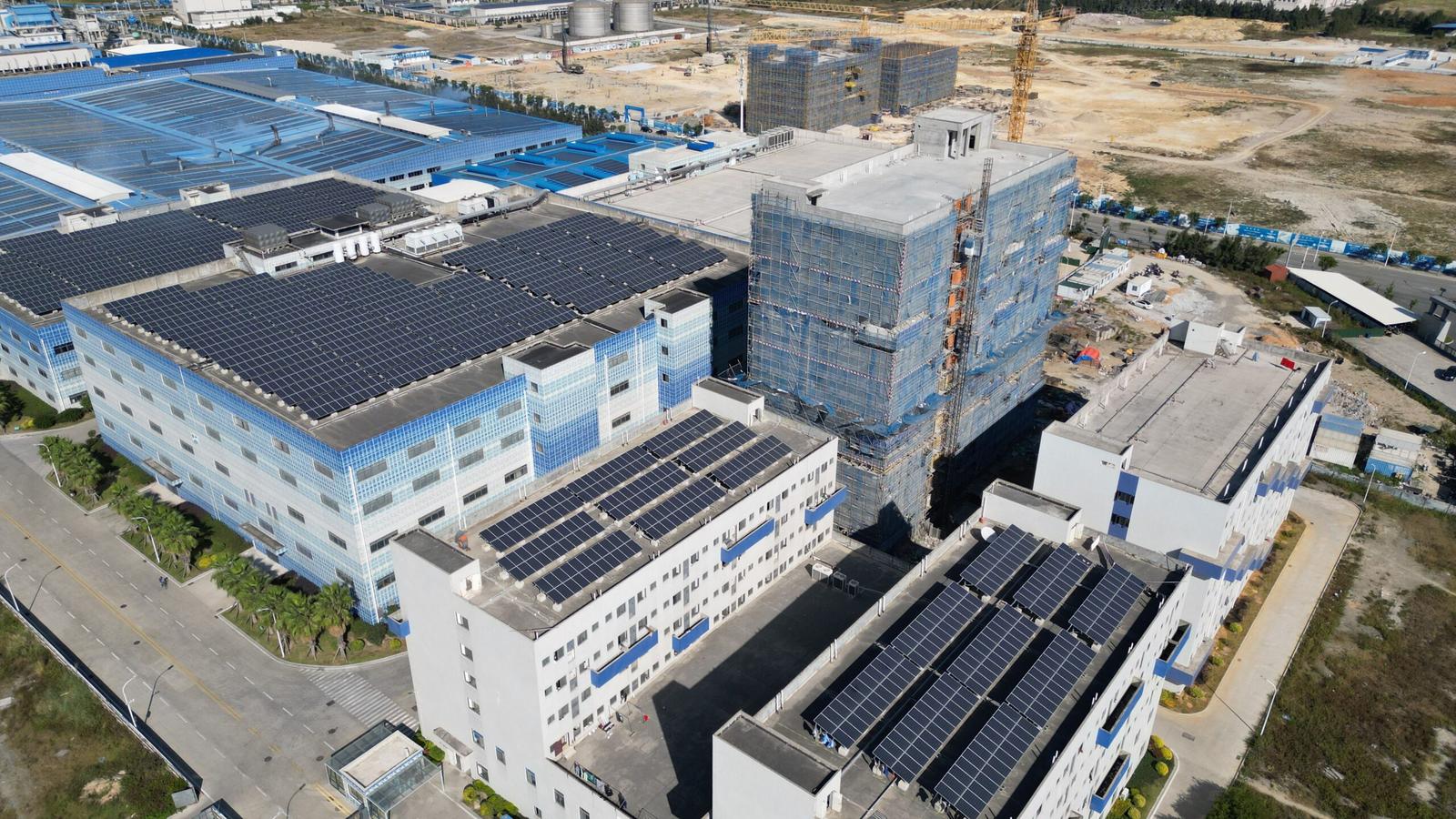
What Happens If My Factory Runs at Night?
A night shift does not automatically make solar unsuitable. Solar generation occurs during daylight hours, so the key question is how much electricity the factory consumes during those hours. If the factory operates both day and night, the daytime solar generation can offset part of its daytime grid consumption.
The remaining electricity requirement can continue to be supplied according to the applicable grid arrangement. For factories with substantial night-time consumption, the project economics should be calculated using the actual load profile rather than assuming that all solar generation will be consumed immediately.

CAPEX or OPEX Solar for Factories
Factories may have different ways of financing a solar project.
Under a CAPEX model, the factory invests in the solar plant and owns the system.
This approach can provide greater control over the asset and its long-term operation, subject to the project’s financial and technical conditions.
Under an OPEX or RESCO arrangement, a third-party developer may finance, own and operate the solar system while the customer pays for the electricity generated under the agreed commercial structure.
This can be relevant for businesses that want to adopt solar without making the entire upfront investment.
The appropriate model depends on the factory’s cash flow, investment objectives, electricity consumption and project structure.
- Our Commercial Solar Installation Process for Factories
Solar installation in an operating factory needs careful coordination because production cannot simply be disrupted for an extended period.
Solar Oorja follows a structured process.
Initial Discussion
We understand your factory’s electricity consumption, operating hours, roof availability and solar objectives.
Site Survey
Our team evaluates the rooftop, shading, structural conditions, access and existing electrical infrastructure.
Electricity Consumption Analysis
Recent electricity bills and available load data are analysed to understand the factory’s energy profile.
System Design
A customised solar system is designed based on the factory’s consumption and available installation area.
Project Proposal
The proposal can cover system capacity, equipment, expected generation, project cost, installation requirements and estimated financial outcomes.
Engineering and Procurement
Required solar modules, inverters, mounting structures, cables and electrical protection equipment are planned according to the approved design.
Installation
Installation is coordinated with the factory’s operations to minimise unnecessary disruption.
Testing and Commissioning
The completed system is tested before final commissioning and handover.
Monitoring and Maintenance
Post-installation support helps monitor system performance and address maintenance requirements.
Will Solar Installation Stop Factory Production?
Solar installation can be planned around the factory’s production schedule. The exact approach depends on the rooftop, electrical configuration, system size and connection requirements.
Installation activities can be scheduled and phased where practical so that unnecessary disruption to manufacturing operations is avoided. The electrical shutdowns required for final integration should be planned in coordination with the factory’s maintenance and operations team.
Why Choose Solar Oorja for Factory Solar Installation?
Factory solar projects require more than simply installing panels on a large roof. The system needs to work with the factory’s electrical infrastructure, operating pattern and commercial objectives.
Solar Oorja provides a complete commercial solar approach covering assessment, design, EPC execution, commissioning and maintenance.
Our commercial solar offering includes systems from 5 kW to 500 kW, with project design based on the property’s requirements. For factories, the focus is on building a system that is technically appropriate, commercially practical and designed around actual electricity consumption.

Get a Solar Feasibility Assessment for Your Factory
If your factory is located in Noida, Greater Noida or Ghaziabad, the next step is not to guess how many panels you need.
Start with your electricity consumption and site conditions.
Share your recent electricity bill and basic factory details with our team. We can assess the available information and determine whether a detailed site survey and solar feasibility study make sense for your facility.

Frequently Asked Question
1. Is rooftop solar suitable for factories?
Rooftop solar can be suitable for factories with adequate roof space, sufficient sunlight, suitable structural conditions and meaningful electricity consumption. The suitability of a particular factory should be confirmed through a technical and financial assessment.
2. How much does commercial solar installation for a factory cost?
Factory solar installation costs depend on system capacity, solar modules, inverters, mounting structures, electrical work, roof conditions, installation complexity and other project-specific requirements. A customised quotation is more accurate than a standard per-kW price.
3. Can solar panels be installed on a factory shed?
Yes, solar panels can potentially be installed on suitable industrial shed roofs. The roof structure, condition, load-bearing capacity, orientation, shading and mounting method should be assessed before installation.
4. Can a factory use solar during production hours?
Yes. Solar generation during daylight hours can supply electricity to the factory’s operating loads. The amount of electricity that can be directly consumed depends on the factory’s load profile.
5. Is solar useful for a factory that operates at night?
It can be. Solar can offset daytime electricity consumption even when a factory also operates at night. The project should be sized using the factory’s actual day and night load profile.
6. Can factories use net metering with rooftop solar?
Depending on the applicable regulations, connection type, system capacity and DISCOM requirements, eligible industrial consumers may be able to use grid-connected solar with the applicable metering or billing arrangement. The current rules should be verified during project planning.
7. Can you install solar for factories in Ghaziabad?
Yes. Factory and industrial solar projects in Ghaziabad can be evaluated based on the facility’s electricity consumption, rooftop area, electrical infrastructure and project requirements.