
Solar Installation for Schools, Colleges & Educational Institutions
Schools, colleges and educational institutions use electricity daily for classrooms, computer labs, libraries, lighting, fans and other essential facilities. Rising electricity bills can add to their operating expenses. Solar installation for schools, colleges and educational institutions helps reduce electricity costs by generating clean energy from sunlight. With suitable rooftop solar panels, educational institutions can make better use of available space, lower their dependence on grid electricity and support a more sustainable learning environment.
Why Schools and Colleges Are Moving Towards Solar
Educational buildings often have something that makes them suitable for rooftop solar: large, unused roof areas and significant daytime electricity consumption.
Unlike residential properties, schools and colleges generally operate during the hours when solar panels are producing electricity. This creates a practical opportunity to use a large portion of the generated solar power directly within the campus.
A properly designed solar system can help an institution:
- Reduce monthly electricity expenses
- Make better use of unused rooftop space
- Reduce dependence on conventional grid electricity
- Improve long-term energy cost planning
- Support sustainability initiatives
- Demonstrate renewable energy use to students and staff
- Reduce the operational impact of rising electricity costs
The actual savings and suitable system size depend on factors such as electricity consumption, tariff, roof area, shading, sanctioned load and the institution’s operating pattern.
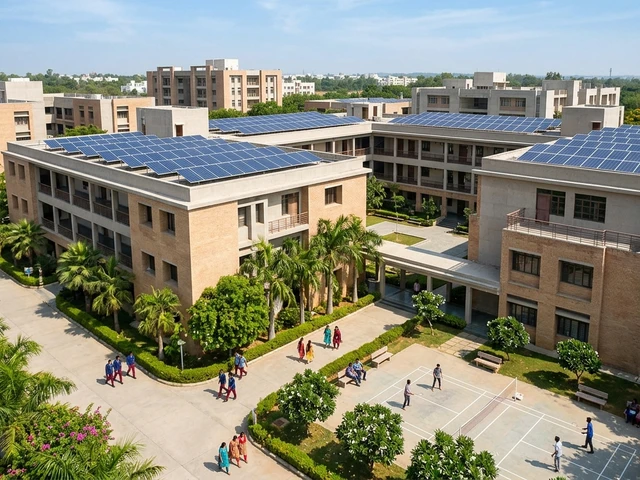
Solar Panel Installation for Schools
Schools have multiple electricity requirements running throughout the day. Classrooms, laboratories, administrative offices, computer rooms, libraries and common areas can all contribute to the overall power demand.
A solar panel installation for schools can be designed according to the school’s actual consumption instead of installing a standard-size system.
Before recommending a system, the solar engineering team can assess:
- Previous electricity bills
- Monthly and annual consumption
- Connected and sanctioned load
- Available rooftop area
- Roof condition and structural requirements
- Shadow and sunlight availability
- Existing electrical infrastructure
- Potential solar generation
- Grid connection and net metering requirements
This approach helps ensure that the proposed solar plant matches the institution’s real requirements.
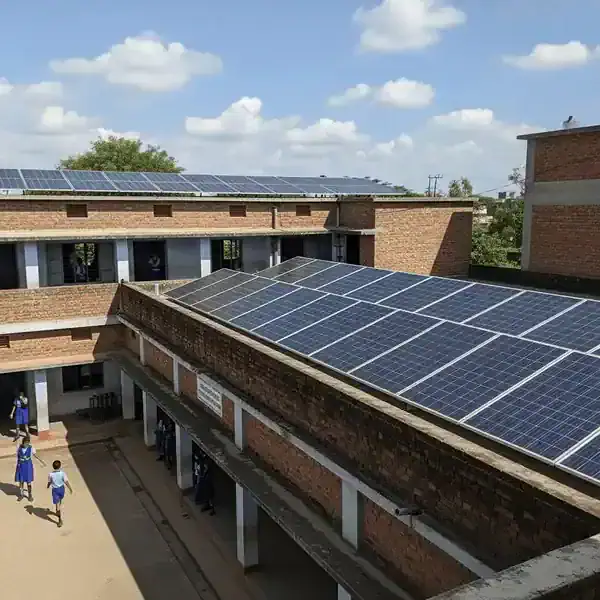
Solar Installation for Colleges and Universities
Colleges and universities can have considerably higher electricity requirements because of larger campuses, laboratories, libraries, hostels, administrative buildings, workshops, auditoriums and other facilities.
A solar installation for colleges can therefore be planned at a larger commercial scale.
Depending on the campus layout, solar panels may be installed on:
- Academic building rooftops
- Administrative blocks
- Library buildings
- Laboratory buildings
- Hostels
- Parking structures
- Other suitable campus areas
For larger campuses, individual buildings can also be assessed separately before developing a combined solar strategy.
The objective is simple: generate as much useful solar electricity as practical from the available space without compromising the existing operations of the institution.
Solar Solutions for Educational Institutions in Noida, Greater Noida and Ghaziabad
Solar requirements can differ considerably between a school in a residential sector and a large college or university campus.
Solar Oorja provides commercial rooftop solar solutions across Noida, Greater Noida and Ghaziabad, with system design based on the property’s electricity consumption, roof conditions and operational requirements.
Solar Installation for Schools in Noida
Schools across Noida can use available rooftop areas for solar power generation. From individual school buildings to larger educational campuses, the system can be designed after reviewing electricity consumption and site conditions.
Solar Oorja can support schools with:
- Rooftop assessment
- Solar system sizing
- Commercial solar design
- Installation and commissioning
- Electrical integration
- Net metering coordination
- System monitoring
- Maintenance support
Solar Installation for Colleges in Greater Noida
Greater Noida has a large number of educational campuses, universities and institutions with substantial built-up areas.
For these properties, a commercial solar assessment can identify suitable rooftops and estimate the potential generation, project cost and expected savings before installation.
A campus with multiple buildings can also be evaluated as a single solar project or through phased installation, depending on its electricity demand and available infrastructure.
Schools, colleges, coaching campuses and other educational institutions in Ghaziabad can also evaluate rooftop solar as a way to control long-term electricity expenses.
The right system depends on the institution’s actual energy consumption rather than simply the size of the building.
A professional site survey helps determine the appropriate capacity and installation approach.
What Is Included in Our Solar Installation Service?
Solar installation for an educational institution involves much more than installing panels on the roof.
Solar Oorja can manage the project from initial assessment through commissioning and ongoing support.
Site Survey and Energy Assessment
Our team reviews electricity bills, consumption patterns, roof space, shading, electrical infrastructure and other site conditions.
Solar System Design
The system is designed according to the institution’s electricity requirements and available installation area.
Rooftop and Structural Assessment
The roof is evaluated before installation to determine the appropriate mounting approach and identify potential installation constraints.
Solar Panel Installation
Our trained installation team handles mounting structures, panels, cabling, inverters and required electrical equipment.
Electrical Integration
The solar system is connected with the existing electrical infrastructure following the required technical and safety requirements.
Net Metering Support
Where applicable, we assist with the required DISCOM process and documentation for grid-connected solar systems.
Testing and Commissioning
The system is checked before being commissioned so that the institution can begin generating solar electricity safely.
Maintenance and Monitoring
Post-installation support helps keep the system operating efficiently through regular inspection, cleaning and performance monitoring.
On-Grid Solar for Schools and Colleges
For institutions that already have a reliable grid connection, an on-grid solar system is often considered because it allows solar generation to work alongside the existing electricity connection.
During the day, the institution’s active loads can use solar electricity. Depending on the applicable regulations and approved connection arrangement, excess generation may be exported to the grid through net metering.
For educational institutions, this can be particularly relevant because much of their electricity consumption occurs during daylight hours.
The right configuration should always be determined after reviewing the institution’s electricity profile and local DISCOM requirements.

Off-Grid Solar for Schools and Colleges
Schools often prefer an off-grid solar system when they operate in areas with frequent power cuts or limited grid access. With solar panels and battery storage, these systems can provide an alternative source of electricity for essential school facilities.
During the day, solar energy can power classrooms, fans, lights, computer labs and administrative offices. Any surplus energy can be stored in batteries for use when sunlight is unavailable, depending on the system’s capacity and energy requirements.
For schools, this setup can help keep daily academic activities running during power interruptions while reducing dependence on the electricity grid.
The right system should be selected after assessing the school’s electricity consumption, backup needs, available rooftop space and battery storage requirements.
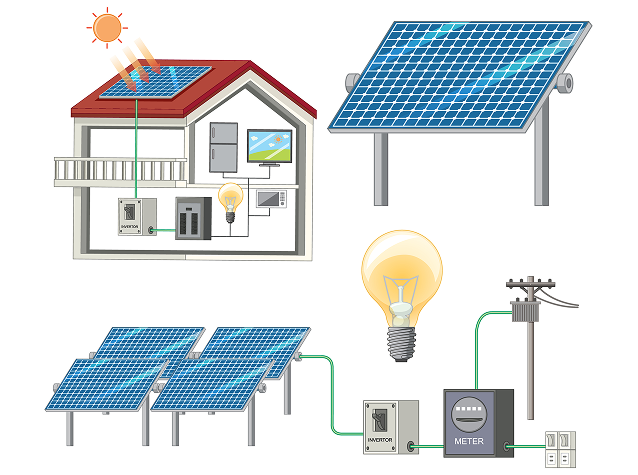
How Much Solar Capacity Does a School or College Need?
There is no single solar capacity that works for every educational institution.
A small school may require a significantly different system from a large university campus.
For example, the assessment may consider:
Electricity consumption → available roof area → sanctioned load → daytime usage → solar generation potential → system capacity
Instead of choosing a system based only on available roof space, we recommend analysing electricity bills and the property’s actual energy requirements first.
This gives the institution a more realistic understanding of:
- Recommended system capacity
- Expected solar generation
- Approximate project cost
- Potential electricity savings
- Available roof utilisation
- Estimated return on investment
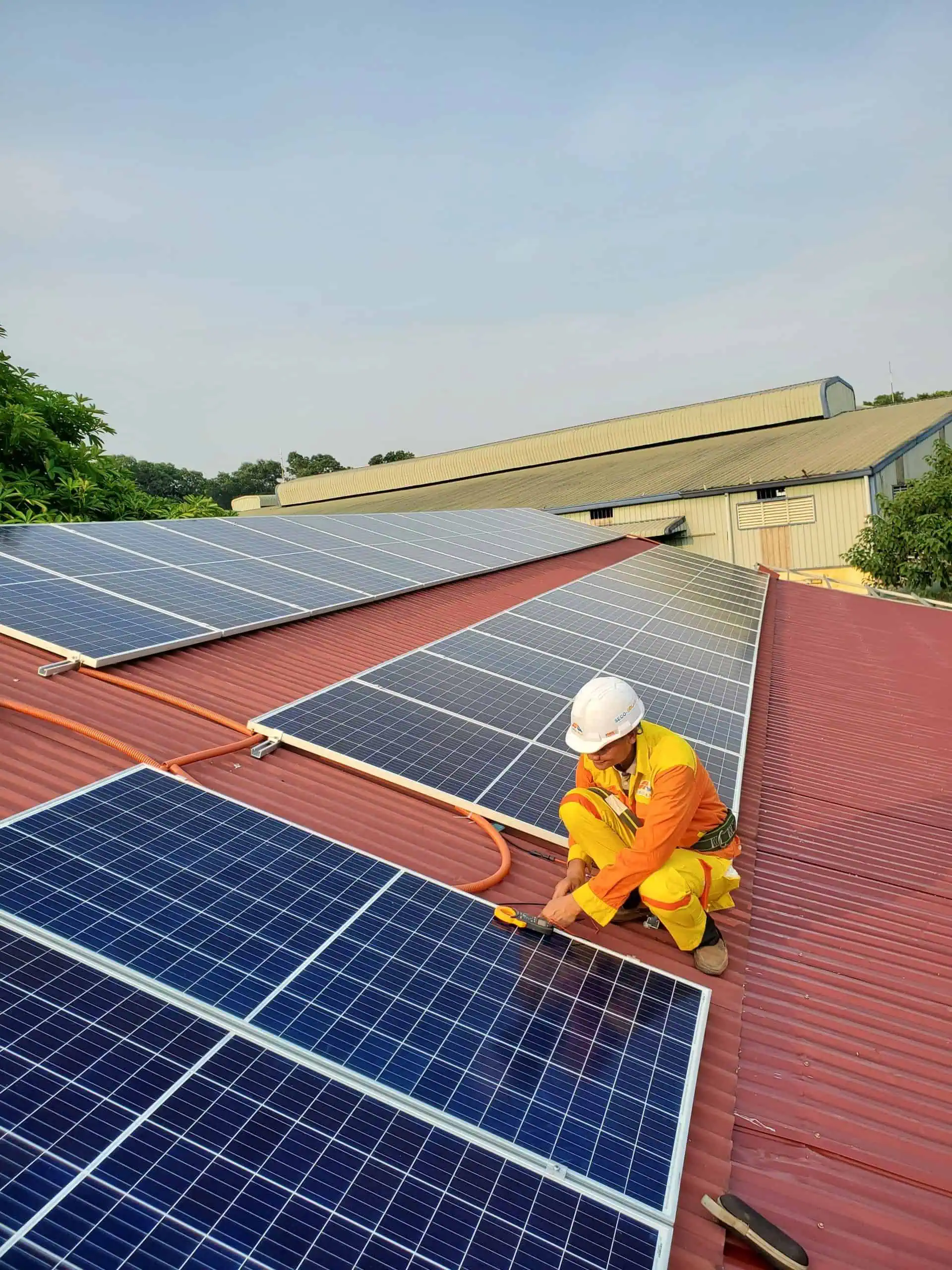
Why Choose Solar Oorja for Educational Solar Projects?
Solar projects for schools and colleges require careful planning because installation work needs to happen without unnecessarily disrupting academic activities.
Solar Oorja handles commercial solar projects with a focus on system design, installation quality and project coordination.
With our commercial solar service, institutions can get:
- Site survey and energy analysis
- Custom system design
- BIS-certified solar components
- Professional installation
- Electrical and civil coordination
- DISCOM and net metering support
- Project commissioning
- Monitoring and maintenance support
- Commercial solar solutions from smaller institutional systems to larger projects
Solar Oorja’s commercial solar service covers systems from 5 kW to 500 kW, allowing the project to be planned according to the institution’s actual requirements.
You can also explore our commercial solar installation services to understand the complete EPC process, system design and post-installation support.
- Solar Installation Process for Schools and Colleges
We keep the process straightforward so the institution does not have to coordinate with multiple vendors.
Initial Consultation
We understand the institution’s electricity requirements, property type and solar objectives.
Site Survey
Our team assesses the roof, electrical infrastructure, available area and shading conditions.
Energy Analysis
Recent electricity bills and consumption patterns are reviewed to determine an appropriate system size.
Solar Proposal
The institution receives a project proposal covering system capacity, estimated generation, equipment, project cost and expected savings.
Installation
After approval, the solar panels, mounting structures, inverter and associated electrical systems are installed.
Testing and Commissioning
The completed system undergoes testing before being connected and commissioned.
Net Metering and Handover
Where applicable, the required DISCOM process is coordinated, followed by system handover and monitoring support.
Make Your School or College More Energy Efficient
Solar is not only an environmental initiative for an educational institution. It can also become part of a practical long-term energy strategy.
Instead of allowing unused rooftop space to remain idle, schools and colleges can use it to generate electricity during the hours when classrooms, offices, laboratories and other facilities are active.
The best way to understand whether solar makes financial sense for your institution is to evaluate the actual electricity consumption, roof area and local connection details.
If your school, college or educational institution is located in Noida, Greater Noida or Ghaziabad, Solar Oorja can assess the site and prepare a solar proposal based on your requirement.
Request a Solar Assessment
Have a school, college or educational campus with a high electricity bill?
Talk to Solar Oorja for a site assessment and commercial solar proposal.
We can evaluate your electricity consumption, available roof space and project requirements and help you determine the appropriate solar system for your institution.

Frequently Asked Question
1. Can solar panels be installed on school rooftops?
Yes. School rooftops can be suitable for solar installation if they have adequate usable space, structural suitability, sufficient sunlight and appropriate electrical infrastructure. A site survey should be completed before finalising the system.
2. Is solar installation suitable for colleges and universities?
Yes. Colleges and universities can consider commercial rooftop solar based on their electricity consumption, available roof area and operating schedule. Larger campuses may also be suitable for phased or multi-building solar projects.
3. How much does solar installation for a school cost?
The cost depends on system capacity, equipment, roof structure, electrical work, installation requirements and other project-specific factors. A customised quotation is more useful than a standard per-kW estimate.
4. Can educational institutions use net metering with solar?
Depending on the applicable electricity regulations and connection type, eligible institutions may be able to use grid-connected solar with net metering. The project should be evaluated according to the applicable DISCOM requirements.
5. Do you provide solar installation in Noida and Greater Noida?
Yes. Solar Oorja provides commercial and industrial solar installation services in Noida and Greater Noida, including system design, installation, electrical integration and net metering support.
6. Do you install solar panels for schools in Ghaziabad?
Solar projects for schools and educational institutions in Ghaziabad can be assessed based on the site’s electricity consumption, roof area and electrical infrastructure.
7. Can solar installation be done without disturbing school activities?
Installation can generally be planned around the institution’s operating schedule. The exact installation timeline depends on system size, roof conditions and project requirements.
8. How do I know what size solar system my college needs?
The recommended capacity should be calculated after reviewing electricity bills, daytime consumption, sanctioned load, available roof area, shading and other site conditions. A professional energy and site assessment provides a more accurate recommendation.
9. What type of solar system is suitable for an educational institution?
For many institutions with a stable grid connection, an on-grid system may be considered. Institutions requiring backup during outages may need to evaluate hybrid or battery-based solutions. The appropriate option depends on the site’s electricity and backup requirements.
10. Does Solar Oorja provide maintenance after installation?
Yes. Solar Oorja provides post-installation maintenance and monitoring support for commercial solar projects to help maintain system performance over time.