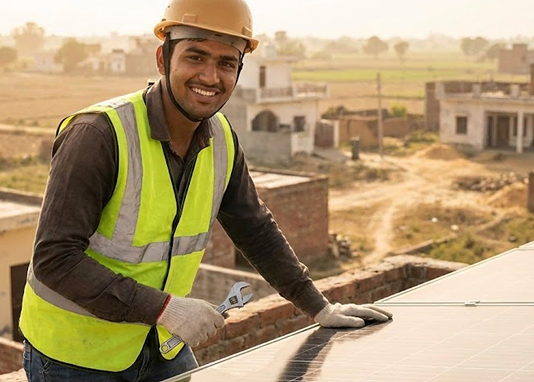
Solar System Solutions for Homes & Businesses in Noida
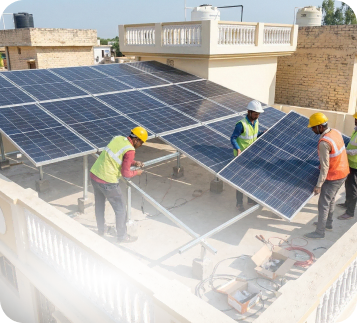
Solar System Solutions for Homes & Businesses in Noida
On-Grid, Off-Grid & Hybrid Solar. MNRE-Empanelled Installation. 25-Year Panel Warranty.
Solar Oorja designs and installs on-grid, off-grid, and hybrid rooftop solar systems across Noida and Greater Noida. Every system uses BIS-certified panels from Tata Power Solar and Adani Solar, and is installed using our zero-drill, leak-proof mounting technology.
We’ll size and configure the right system for your roof, your consumption, and your budget.
- MNRE Empanelled
- PM Surya Ghar Listed
- UPNEDA Registered
- BIS Certified Products
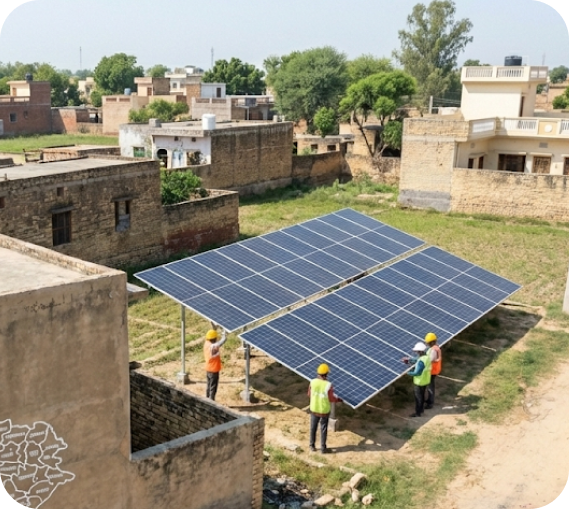
Three Solar Systems. One Right Fit for You
Display as three cards side by side on desktop, stacked on mobile. Each card links to its child page.
Most Popular
Subsidy Eligible
On-Grid Solar System
Connected to the electricity grid with net metering. Your panels generate power, your home uses what it needs, and the surplus goes to the grid as bill credit. No batteries needed. Lowest cost, fastest payback.
- Ideal for: Homes and businesses with stable grid supply
- 3kW system cost: ₹50,000 to ₹70,000 after subsidy
- Payback period: 2.5 to 3.5 years
- Subsidy: Up to ₹1,08,000 under PM Surya Ghar
Full Independence
Off-Grid Solar System
Fully self-contained. Not connected to the grid at all. Solar panels charge batteries, and your home runs entirely on stored solar power. No electricity bill. No grid dependency.
- Ideal for: Farmhouses, remote locations, areas with no grid access
- 3kW system cost: ₹2,20,000 to ₹2,80,000
- Battery type: Lithium-ion or lead-acid
- Subsidy: Not eligible (no grid connection)
Best of Both
Subsidy Eligible
Off-Grid Solar System
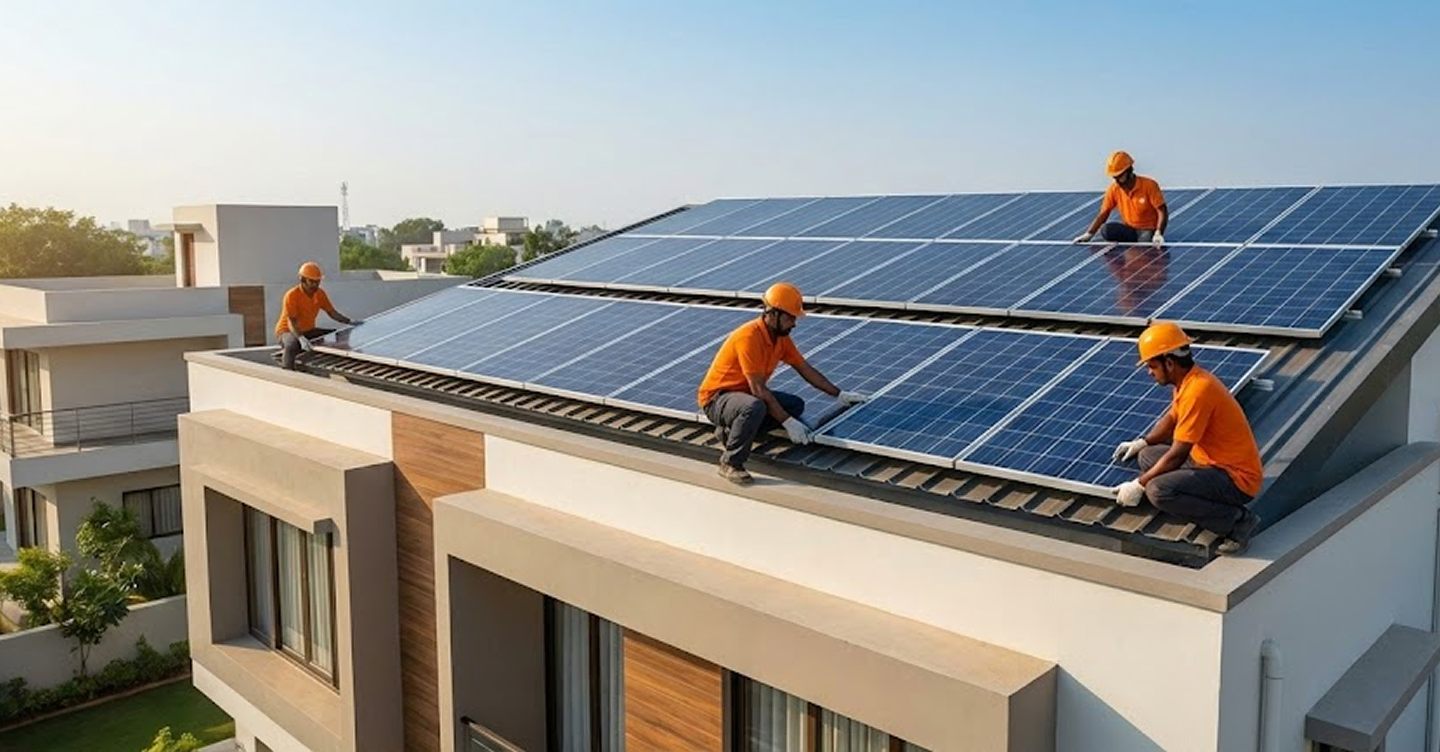
Grid-connected with battery backup. You get net metering savings like on-grid, plus the batteries kick in automatically during power cuts. Replaces your need for a separate home inverter.
- Ideal for: Areas with frequent power cuts (Greater Noida West, Noida Extension)
- 3kW system cost: ₹1,40,000 to ₹2,10,000 after subsidy
- 3kW system cost: ₹1,40,000 to ₹2,10,000 after subsidy
- Subsidy: Not eligible (no grid connection)
Compare Solar System Types
Clean, scannable table. Mobile-responsive with horizontal scroll or flip to card layout on small screens.
| Feature | On-Grid | Off-Grid | Hybrid |
|---|---|---|---|
| Grid connection | Yes | No | Yes + Battery |
| Works during power cuts | No | Yes | Yes |
| Net metering (NPCL/UPPCL) | Yes | No | Yes |
| PM Surya Ghar subsidy | Up to ₹1,08,000 | Not eligible | Up to ₹1,08,000 |
| 3kW cost after subsidy | ₹50K to ₹70K | ₹2.2L to ₹2.8L (no subsidy) | ₹1.4L to ₹2.1L |
| ROI payback | 2.5 to 3.5 years | 5 to 7 years | 4 to 6 years |
| Maintenance | Low | Medium | Medium |
| Best for | Stable grid areas | No grid access | Power cut prone areas |
Not sure which one fits? Our engineer will assess your roof, electricity bill, and power cut frequency during a free 30-minute site survey.
Every Solar Oorja System Comes With

- About Solar Oorja
- UP, India
- 100+ Installer
Solare Oorja is born out of the passion to de-escalate pollution and escalate the adoption of mass solar. Two like-minded environment pros from IIT Bombay started SolarSquare in 2015 as a two-member pack. Now, we’re the 3rd largest EPC contractor for residential installations in India. We’ve helped 25,000+ homes go solar and have been helping our customers save up to 90% on their monthly electricity bills. We install both on-grid and hybrid solar systems. In the near future, we will start the installation of off-grid solar systems too. Some of the services that have set us apart from other vendors include the following.
- We offer free solar consultation services
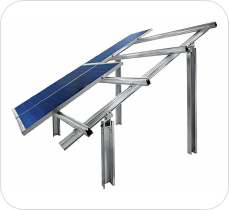
- We use premium-quality prefabricated mounting structures that are resilient and durable enough to handle cyclonic wind speeds reaching up to 170 kmph
- We offer easy, 10-minute loan approval
- Our solar consultants and design team procures a 3D model of how solar would look on your rooftop within 15 minutes of the site survey
- We offer many EMI schemes; zero-cost being the most popular one
- We offer a 5-year AMC contract
We’re on a mission to build a legacy brand that values its customers the most
- Overview of an off grid solar system
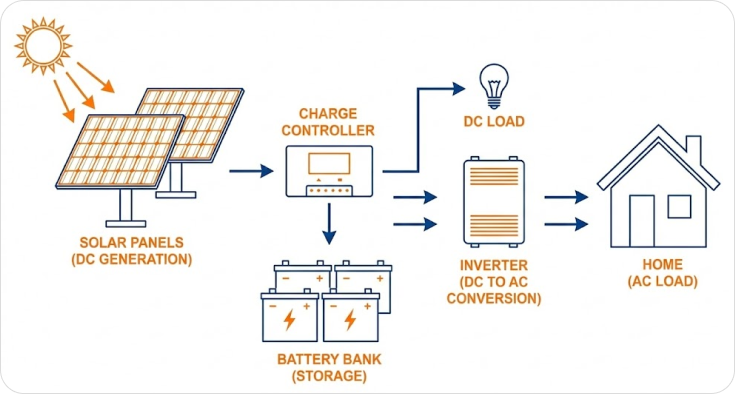
An off-grid solar system, also known as a standalone solar system, works on the same principle as an on-grid solar system: the PV cells capture the sunlight and convert it to electricity. However, the major difference is that there’s no grid connection in the case of an off-grid solar power system. Instead, it uses batteries to store the electricity generated by the panels during sunshine hours.
The off-grid solar system price in India is higher than that of an on-grid solar system price. Besides, maintaining off-grid solar systems takes more effort (and money) because batteries are involved and they have to be replaced periodically to keep the system functioning properly.
To give you an idea of the cost, here are some demonstrative rates:
- 3 kW off-grid solar system price in India: *Rs. 2,40,000 onwards
- 5 kW off-grid solar system price in India: *Rs. 4,50,000 onwards
*Please note: SolarOorja does not install off-grid solar systems. The off-grid solar panel prices listed above are standard market estimates.
Ready to explore the workings of an off-grid solar system, all the price details, and whether you need to invest in off-grid solar as an Indian homeowner, especially because the Indian government offers a subsidy for the installation of an on-grid rooftop solar system? Dive in for all the details!
- What is an Off-Grid Solar System?
An off-grid solar system is a standalone set-up that produces and stores electricity without any connection to the public utility grid. How? It stores the power it generates in batteries.
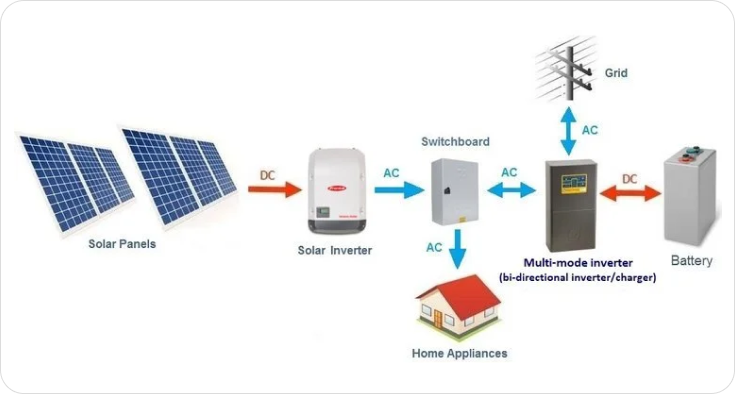
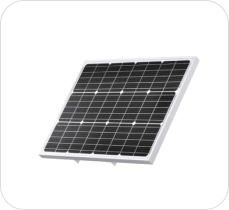
It’s a careful set-up of the following components that work in tandem to produce electricity from sunlight:
- When to Use an Off-Grid Solar Panel System?
Most Indian homes do not require off-grid solar systems, as their power consumption needs are met by on-grid rooftop solar systems, which are much cheaper and easier to maintain.
However, you will need an off-grid solar system in the following situations:
- You live in a remote area with no utility grid
- Your area faces extreme power cuts, and the grid is unreliable
However, if you live in an area with a reliable grid connection, the benefits of an on-grid solar system are unbeatable!
Now, let’s break down the entire off-grid solar system component by component so you can understand the role of each individual component in electricity generation.
- What Are the Components of an Off-Grid Solar System?
#1. Solar panels
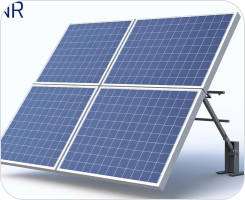
Solar panels are made up of solar cells.
- When they’re made of one single silicon crystal, the resulting panel is monocrystalline.
- When they’re made of multiple silicon crystals, the resulting panel is polycrystalline (multicrystalline).
#2. Solar inverter
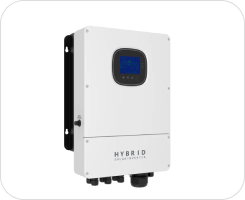
The power from solar panels is in the form of direct current. Home appliances run on AC power. This is where the solar inverter comes into the picture. It converts DC power into AC power. An off-grid solar inverter, just like an on-grid inverter, is the heart of the solar system.
#3. Batteries
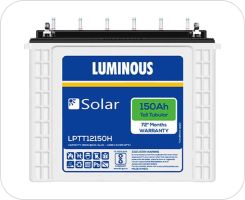
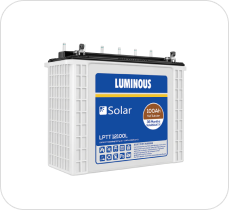
Off-grid solar functions on batteries.
- During the sunshine hours, the electricity that the panels are producing is used to run the house.
- Whatever is extra is used to charge the batteries.
- That same power from the battery is then used to keep the house running at night.
- How Does Off-Grid Solar Work?
Sunlight Absorption & Electron Excitation Through Solar Panels

Each solar panel is packed with photovoltaic (PV) cells made of semiconductor materials, typically silicon.
When sunlight (photons) hits a PV cell:
- It transfers energy to electrons in the semiconductor’s atoms, freeing them from their bonds.
- These loose electrons flow through the material to produce a direct current (DC) electric charge.
- Solar panels are wired in series (strings) to boost voltage and in parallel to boost current, optimizing the total power output for your system’s voltage requirements.
Sunlight Absorption & Electron Excitation Through Solar Panels
Because most off-grid solar installations use multiple strings of panels, a combiner box serves as the point where each string’s positive and negative outputs meet.
Maximum Power Point Tracking & Charge Regulation Through a Solar Charge Controller
The DC power from the combiner box flows into the solar charge controller that has a twofold job:
Net Metering & Govt Approvals
Regulated DC current enters the battery bank, which can be made of lead-acid or lithium-ion. Each type has its own voltage profile and charging algorithm:
Monitoring & Support
Modern off-grid inverters and charge controllers communicate. They share real-time metrics like battery voltage, SoC, load demand, and temperature. Clearly, the inverter knows when it’s safe to draw power and when to throttle back.
- What’s the Off-Grid Solar System Price in India in 2025?
The off-grid solar system price in India varies based on factors such as:
- The system capacity
- The type of solar panels
- The type of solar inverter
- Types of batteries (12 volt, 24 volt, or 48 volt)
Before we walk you through the prices based on multiple factors, let’s address the matter of subsidy on an off-grid solar system in India in the section below!
- What About Off-Grid Solar System Subsidy?
To clear the air once and for all, the Indian government does not offer a subsidy on off-grid solar systems under the PM Surya Ghar Muft Bijli Yojana. You need to install an on-grid rooftop solar system to receive the financial assistance the government offers in the form of a subsidy.
That said, let’s check out the off-grid solar system price based on system capacity:
| System Capacity | Off-Grid Solar System Price (Approx.) |
|---|---|
| 1 kW | ₹85,000 - ₹1,00,000 |
| 2 kW | ₹1,70,000 - ₹2,00,000 |
| 3 kW | ₹2,55,000 - ₹3,00,000 |
| 4 kW | ₹3,40,000 - ₹4,00,000 |
| 5 kW | ₹4,25,000 - ₹5,00,000 |
*Please note : Solar Oorja does not install off-grid solar systems. The off-grid solar panel prices listed above are standard market estimates.
- Advantages and Disadvantages of Installing Off-Grid Solar Systems in India?
Here’s a clear breakdown of the benefits of installing off-grid solar power systems in India:
- Power Where You Need It: An off-grid solar system is the only option in rural areas where there is no grid
- Zero-emission Energy Source: Off-grid solar power is clean and green. Not only does it power homes where there’s no grid, but it also ensures that no pollution is being caused in lieu of generating electricity.
That said, let’s now walk you through the most critical limitation of off-grid solar systems: ROI!
ROI (return on investment) in the case of off-grid solar systems takes more time than an on-grid system of the same capacity. Why? Well, because batteries are expensive.
Usually, the off-grid solar system price breaks even in about 6-7 years.
In the case of an on-grid solar system, the price breaks even in 3-4 years.
Get Your Rooftop Estimate
Questions About Our Solar Solutions
Which system type do you recommend for most Noida homes?
On-grid. The grid supply across most Noida sectors is stable, both NPCL and UPPCL support net metering, and on-grid qualifies for the full ₹1,08,000 subsidy. If your area gets regular power cuts (Greater Noida West, parts of Noida Extension), we’ll recommend hybrid instead.
Which systems qualify for the PM Surya Ghar subsidy?
On-grid and hybrid residential systems that are connected to the grid with a net meter. Off-grid doesn’t qualify. Maximum subsidy is ₹1,08,000 for 3kW and above (₹78,000 Central + ₹30,000 UP State).
Can I upgrade from on-grid to hybrid later?
It depends on your inverter. If you think you might want batteries in the future, we can install a hybrid-ready inverter from the start. Costs slightly more upfront but saves you from replacing the inverter later. Mention this during your site survey.
Does an on-grid system work during power cuts?
No. On-grid shuts off automatically during outages. This is a safety requirement to protect utility workers. If backup power matters to you, hybrid or off-grid are the right options.
Do you install all three types?
Yes. Solar Oorja installs on-grid, off-grid, and hybrid systems for both residential (1kW to 10kW) and commercial (5kW to 500kW) projects across Noida and Greater Noida. We recommend the type based on your situation, not the one with the highest margin.

Get the Right Solar System for Your Roof
Our engineer will visit your home or business, check your roof, review your electricity bills, and recommend the right system type and size. Free. No obligation.